

Recovery from drug addiction is not simply about stopping drug use; rather, it is an ongoing process of change through which individuals overcome the harmful effects of substance use, improve their physical and mental health, well-being and quality of life, develop self-reliance, rebuild relationships, and move towards a healthy, meaningful and productive life. Recovery does not happen overnight. It is an ongoing journey that requires continuous commitment, support and access to a continuum of care to help individuals maintain recovery and lead healthy and fulfilling lives.
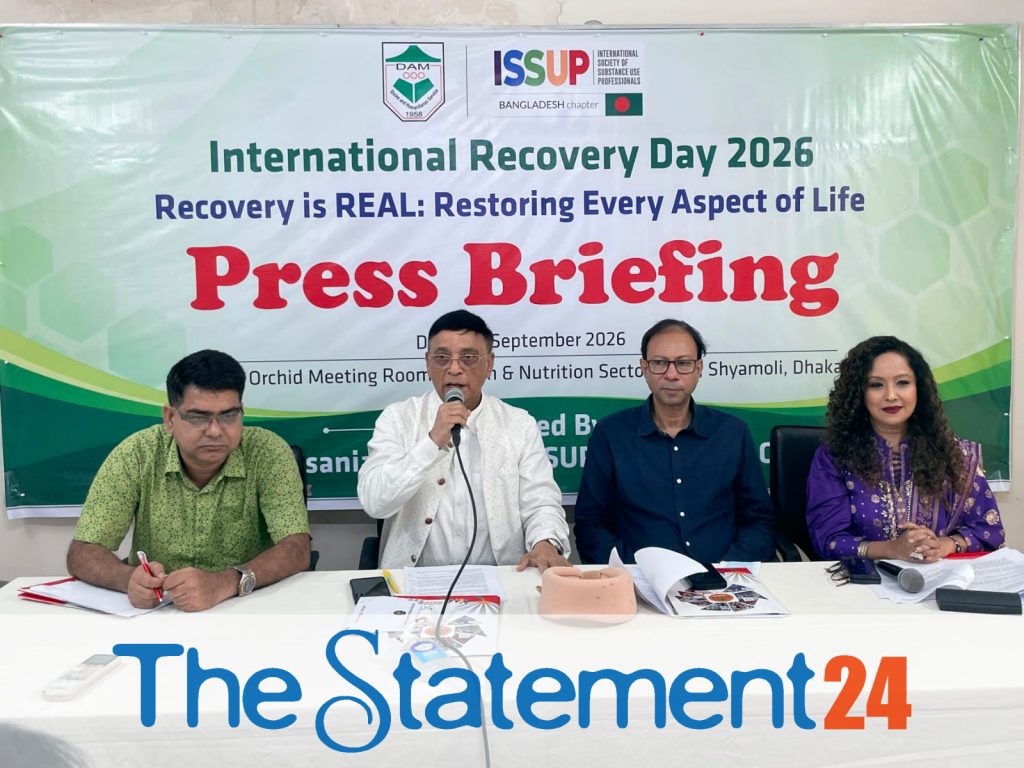
On the occasion of Recovery Day 2026, speakers made these remarks at a discussion meeting jointly organized by Dhaka Ahsania Mission (DAM) and the Bangladesh Chapter of the International Society of Substance Use Professionals (ISSUP) at the meeting room of the Health & Nutrition Sector, Dhaka Ahsania Mission, Shyamoli, Dhaka, at 11:30 a.m. on Wednesday, 30 September.
September is observed globally as Recovery Month. The theme of this year’s observance is “Recovery Is Real: Restoring Every Aspect of Life,” highlighting the importance of recovery in restoring and rebuilding every aspect of an individual’s life and supporting people to move towards a healthy and meaningful life.
The event was attended by Professor Dr. M. A. Mohit Kamal, psychiatrist and Chairman of the Bangladesh Chapter of ISSUP, as a guest. He said that sustainable recovery requires more than medical treatment; it also depends on family support, aftercare, peer support, relapse prevention, and access to education, employment and social opportunities. A continuum of care, from early intervention and treatment to rehabilitation, aftercare and community-based support, is essential to sustain recovery and prevent relapse.
He noted that after completing treatment, returning to the same environment, unemployment, family conflicts and social stigma may increase the risk of returning to substance use. Calling for people with drug dependence not to be labelled as “addicts” or by other derogatory terms, he emphasized the importance of recognizing them as individuals experiencing a health condition. He further said that a person’s current challenges do not define their entire identity. Compassion, not stigma, makes the path to recovery easier and helps people rebuild a healthy and meaningful life.
In his keynote presentation, Iqbal Masud, Director of the Health & Nutrition Sector of Dhaka Ahsania Mission and General Secretary of the Bangladesh Chapter of ISSUP, said that according to findings from a recent national study, approximately 8.2 million people in Bangladesh use some form of drugs, accounting for around 4.88 percent of the total population. He noted that substance use often begins at an early age. Around 33 percent of users reported initiating drug use between the ages of 8 and 17, while 59 percent started between the ages of 18 and 25. Nearly 90 percent of users reported that drugs are easily accessible to them.
The study further found that approximately 69 percent of people expressed a desire to receive treatment or rehabilitation services, while 62 percent wanted counselling support. However, only 13 percent had access to treatment or rehabilitation services. According to relevant stakeholders, this gap clearly highlights the shortage of drug treatment and rehabilitation services in the country. The situation is further complicated by the limited availability of evidence-based treatment and widespread misconceptions about drug treatment and rehabilitation services.
The speakers emphasized that recovery should not end when a person completes a treatment programme. Recovery requires a continuum of care that connects prevention, early intervention, treatment, rehabilitation, aftercare, relapse prevention, social reintegration and long-term community support. Such a continuum can help individuals sustain recovery, regain independence, rebuild relationships, pursue education or employment, and participate meaningfully in family and community life.
The speakers also called for a public health-oriented drug policy that considers the decriminalisation of drug use and drug dependence, particularly to reduce stigma, encourage people to seek treatment and counselling, and ensure that individuals with substance use disorders are connected to appropriate health and social services rather than being pushed further into exclusion. They emphasized that decriminalisation should be accompanied by accessible, evidence-based treatment, rehabilitation, harm reduction, recovery support and a strong continuum of care, while maintaining appropriate measures to address drug trafficking and other drug-related criminal activities.
The event was moderated by Rakhee Ganguly, Senior Psychologist, Health & Nutrition Sector, Dhaka Ahsania Mission. Other speakers included Jamiaul Ahsan Shipu, Senior Reporter, The Daily Ittefaq; Md. Shamim Khan, Director of Ashroy, a private drug addiction treatment centre; Lutfur Rahman Manik, Director of Safe Home Drug Addiction Treatment and Rehabilitation Centre; and Md. Shahabuddin Chowdhury Sumon, Director of Utsho Drug Addiction Treatment Centre.
At the event, the speakers said, “People want to recover, but access to the necessary treatment, counselling and rehabilitation services is not reaching everyone.” The issue of drug use must not be viewed solely as a law-and-order concern; it should also be addressed from a public health and medical perspective.
They called on policymakers to integrate addiction treatment and counselling services into the government healthcare system at the district level, establish a strong continuum of care, strengthen quality control and standards for treatment and rehabilitation centres, increase the availability of trained professionals, ensure specialized services for women and adolescents, and promote policies that protect the dignity, rights and social inclusion of people affected by substance use.
Dhaka Ahsania Mission has been working for many years in the areas of drug prevention, treatment, rehabilitation and mental health. Meanwhile, the Bangladesh Chapter of the International Society of Substance Use Professionals (ISSUP) has been working to strengthen the capacity of professionals and promote evidence-based practices in substance use prevention and treatment.