
Friday, August 28Dedicate to Right News
Shadow

Opinion

Are Untreated Waste Discharges Killing Bangladesh’s Rivers?

Are Untreated Waste Discharges Killing Bangladesh’s Rivers?

Breaking News, Opinion
Moazzem Hossain TipuBangladesh is widely known as a riverine country. Its rivers are not merely part of the country’s geography; they are closely connected with agriculture, fisheries, navigation, industry, biodiversity, and the livelihoods of millions of people. Yet many of the country’s rivers are now under severe pressure from untreated industrial effluents, municipal sewage, and solid waste.Various government assessments of river and water quality have highlighted serious concerns about pollution in and around major urban and industrial areas. According to a national water-quality assessment by the Department of Environment (DoE), municipal and industrial solid waste, untreated sewage, and industrial effluents are among the major sources of river pollution in areas surrounding ...

A Burning Cigarette on a Moving Bus: An Overlooked Threat to Road Safety

A Burning Cigarette on a Moving Bus: An Overlooked Threat to Road Safety

Breaking News, Opinion
Kazi Mohammad Hasibul HuqWhen we talk about road safety in Bangladesh, the conversation usually revolves around familiar concerns: unsafe roads, unfit vehicles, reckless driving, unlicensed drivers and excessive speed. These are undoubtedly major risks. But there is another, less visible form of dangerous behavior that deserves far greater attention-smoking while driving.A cigarette in the hand of a driver may appear to be nothing more than a personal habit. Behind the steering wheel of a moving bus or truck, however, it becomes a potential source of distraction. Finding a cigarette, reaching for a lighter, lighting it, handling the cigarette, shaking off ash and dealing with a dropped or burning cigarette can all compete with the driver's primary responsibility: maintaining contin...
Can Ending the Unregulated Sale of Tobacco on Watercraft Ensure Tobacco-Free Water Transport?

Can Ending the Unregulated Sale of Tobacco on Watercraft Ensure Tobacco-Free Water Transport?

Breaking News, Opinion
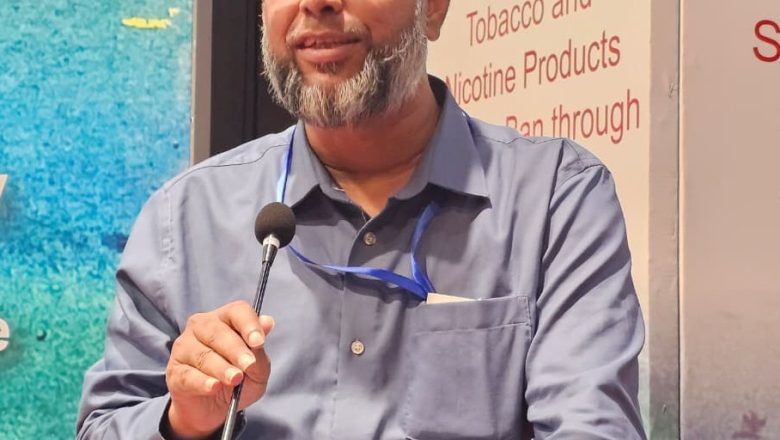
Moazzem Hossain TipuBangladesh’s waterways are an important part of the country’s economy, communication network, and everyday life. Every day, thousands of people travel by launches, ferries, steamers, and other watercraft. Children, women, older people, patients, workers, and people from different walks of life travel in the same environment. Therefore, tobacco use on watercraft is not merely a personal behavior; it directly affects the health, safety, and comfort of other passengers. To ensure tobacco-free waterways, awareness messages alone are not enough. Equal importance must be given to stopping the unrestricted sale of tobacco, particularly around watercraft and terminals, and to effectively enforcing the existing law. Where tobacco is easily available and there is no visible p...
Give Police Limited Power to Fine Smokers on Public Transport

Give Police Limited Power to Fine Smokers on Public Transport

Breaking News, Opinion
Kazi Mohammad Hasibul HuqSmoking on public transport is prohibited in Bangladesh, and the law provides for fines for violations. Yet despite these legal provisions, smoking continues to occur on buses, minibuses and other forms of public transport. The problem is particularly difficult when a violation takes place on a moving vehicle. A passenger or transport worker may smoke for only a few minutes, making it difficult for conventional enforcement mechanisms to respond in time. This raises a fundamental question: when a violation occurs, who can act immediately, who can document the offence, and who can impose the appropriate penalty? The issue has become more important following the Smoking and Tobacco Products (Control) (Amendment) Act, 2026, which was gazetted on April 10, 2026. Th...
Beyond RMG: Why the “Orange Economy” is Bangladesh’s Next Strategic Frontier

Beyond RMG: Why the “Orange Economy” is Bangladesh’s Next Strategic Frontier

Breaking News, Opinion
Tawhid RahmanFor decades, the story of Bangladesh's economic triumph has been woven tightly into a single fabric: the ready-made garment (RMG) sector. It rescued our macroeconomy, empowered millions, and carved our place on the global map. But as we navigate complex post-uprising transitions and stare down our impending LDC graduation at the end of 2026, the limits of a single-engine growth model are becoming uncomfortably clear. High-volume, low-margin manufacturing cannot sustain the aspirations of a modern, digital-native youth population. If we are to escape the middle-income trap, we must pivot from being a nation that merely executes external blueprints to one that designs them. We must transition from an economy driven by muscle to one fueled by mind. This is the premise of the...
Protecting the Sundarbans: Mangrove Restoration, Biodiversity Conservation and Blue Carbon Financing

Protecting the Sundarbans: Mangrove Restoration, Biodiversity Conservation and Blue Carbon Financing

Breaking News, Opinion
Mohammad Navid SafiullahOn the occasion of World Environment Day, observed under the theme “Inspired by Nature, for Climate. For Our Future.”, renewed global attention is being drawn to ecosystem restoration as a cornerstone of climate action. The Sundarbans, a UNESCO World Heritage Site, represents the world’s largest continous mangrove ecosystem and a critical natural infrastructure for climate regulation, disaster risk reduction, and biodiversity conservation.The Sundarbans sustains rich biological diversity, including the flagship, emblematic Royal Bengal Tiger, alongside numerous aquatic and terrestrial species that support ecological balance and millions of coastal livelihoods. However, this globally significant ecosystem is increasingly under stress due to climate change imp...
Ramisa Murder: Individual Responsibility vs State Responsibility

Ramisa Murder: Individual Responsibility vs State Responsibility

Breaking News, Opinion
Rezaur Rahman RizviThe tragic rape and murder of young Ramisa in Mirpur, Dhaka, a few days ago has shaken not only one family, but the conscience of the entire society. When such horrific incidents continue to occur repeatedly, an unavoidable question emerges: Is the responsibility solely that of a mentally depraved criminal, or do the state and society also share part of the blame? The question of “Ramisa Murder: Individual Responsibility vs State Responsibility” has therefore become profoundly significant today.First and foremost, there is no room to deny individual responsibility. The person who raped and murdered an innocent child did not merely violate the law; he crossed the darkest boundaries of humanity itself. The harshest possible punishment must be ensured for such offen...
Policymakers Need to Strengthen Bangladesh’s Tobacco Control Law

Policymakers Need to Strengthen Bangladesh’s Tobacco Control Law

Breaking News, Opinion
Professor Dr ArupRatan ChoudhuryBangladesh’s fight against tobacco products has a strong relation to its political environment and health objectives. As the new government led by the BNP, it inherits a major legacy in the implementation of the tobacco control law in the country. Because Bangladesh was one of the first countries in the world to sign the WHO Framework Convention on Tobacco Control (WHO FCTC) (16 June 2003), led by the ruling party BNP’s government and ratified it in 2004, and it came into implementation on 27 February 2005.After the signing of WHO FCTC the story begins back in 15th March 2005 when a government led by the BNP enacted the Smoking and Tobacco Products Usage (Control) Act. It was a crucial moment when most developing countries were hesitant to take a str...
Tobacco Control Ordinance 2025 Demands Parliamentary Action Now

Tobacco Control Ordinance 2025 Demands Parliamentary Action Now

Breaking News, Opinion
Munshi Alauddin Al AzadTobacco imposes a multidimensional burden that extends far beyond, affecting families, communities, public health systems, the environment, and the national economy. The Smoking and Tobacco Products Usage (Control) (Amendment) Ordinance, 2025 is therefore not merely a public health measure; it is a test of our political will and policy coherence. Moreover, to protect people from the devastating impact of tobacco, passing the Tobacco Control Ordinance 2025 as a bill in Parliament is indispensable to safeguard public health and reduce preventable deaths.According to the Tobacco Atlas (2025), nearly 200,000 people in Bangladesh die prematurely each year from tobacco-related diseases. Evidence from Bangladesh Medical University (2025) further shows that tobacco u...
A Bold Step Toward a Tobacco-Free Future

A Bold Step Toward a Tobacco-Free Future

Breaking News, Opinion
Professor Dr. ArupRatan ChoudhuryBangladesh is one of the world's top tobacco users, about3 crore 78 Lakh of the country's adult population uses tobacco products in any form.According to the Tobacco Atlas, 2025 around 130,135 people die fromsmoking each year in Bangladesh.In 2025 there is major leap taken by the interim government for amendedtheSmoking and Tobacco Products Usage (control) act 2005. The government already issued gazette notification of this act. on 30 December, 2025 to protect our economy and future generation from the harm of tobacco usage.Section 2 provides various definitionsof the law/ordinance that expanded existing one and included new definition. With existing tobacco products, this ordinance includes emerging tobacco products, such as e-cigarette or elec...