

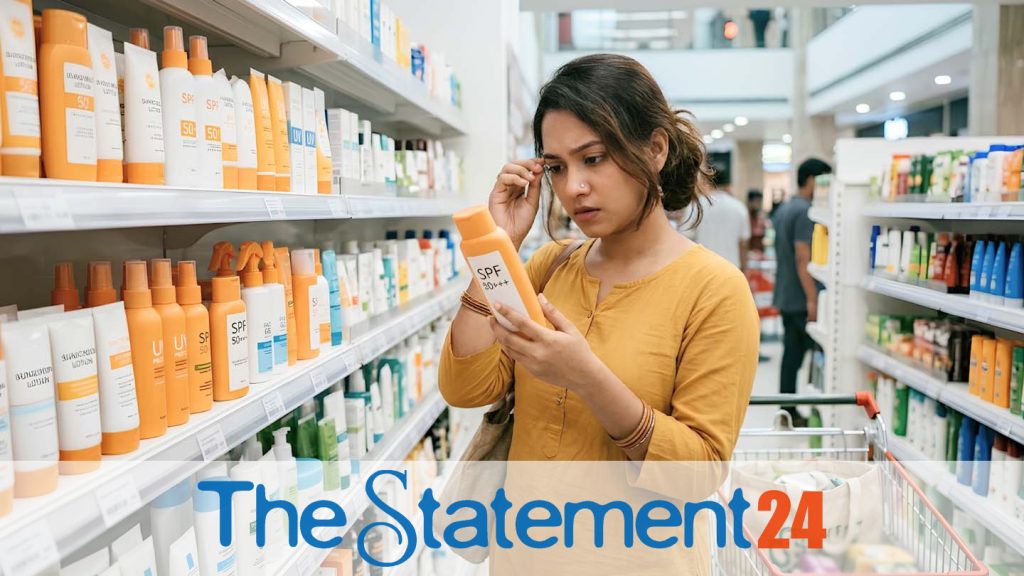
Before heading out in the morning, skincare has become an important part of many people’s everyday routine. Along with face wash, toner, moisturizer and serum, sunscreen has also become a regular part of daily skincare. However, when choosing a sunscreen, one of the first things that catches our attention is its SPF (Sun Protection Factor) number.
There are many questions about what level of SPF should be used and why it matters. But before choosing a number, it is important to understand what SPF actually means.
Simply put, SPF is a measure of the protection a sunscreen provides against UVB rays from the sun, which are primarily responsible for sunburn. UVA rays, on the other hand, penetrate deeper into the skin and are associated with premature skin ageing and long-term skin damage. This is why SPF alone should not be the only consideration when choosing sunscreen. It is also important to look for broad-spectrum protection, which indicates protection against both UVA and UVB rays.
As the SPF number increases, protection against UVB rays also increases. However, the increase is not proportional to the number. Generally, SPF 15 filters out around 93% of UVB rays, SPF 30 around 97%, SPF 50 around 98%, and SPF 100 around 99%. This means that although SPF 50 offers greater UVB protection than SPF 30, the numerical difference between the two does not translate into an equally large difference in protection.
Another important point is that SPF does not indicate exactly how long a person can safely stay in the sun. Using SPF 30, for example, does not simply mean that someone can remain in the sun twice as long as they could while using SPF 15.
In real life, the level of protection depends on several factors, including the intensity of sunlight, the amount of sunscreen applied, sweating, water exposure and whether the sunscreen is reapplied properly.
So, what should consumers look for when choosing sunscreen?
The American Academy of Dermatology recommends choosing a broad-spectrum sunscreen with SPF 30 or higher. When spending time outdoors, sunscreen should generally be reapplied approximately every two hours and more frequently after swimming or heavy sweating, depending on the product’s water-resistance instructions.
Another important consideration is whether the SPF claim written on the packaging is supported by appropriate testing.
If SPF 30, SPF 50 or SPF 100 is printed on a sunscreen package, the number alone may not provide consumers with the full picture. Information about how the product was tested, the type of testing method used and the laboratory involved can provide additional context about the claim.
However, such information is not always readily available to consumers, making it difficult for an ordinary buyer to understand how a product’s stated SPF relates to its laboratory test results.
In Bangladesh, some brands have begun sharing more information about sunscreen testing. Skin Cafe is one example. According to laboratory reports shared by the brand, its Skin Cafe SPF 50 PA+++ Sunscreen with Vitamin C was tested by Taiwan-based Bionest Biochemical Technology Co., Ltd. Using a UV spectrophotometry method, the reported SPF value was 52.73.
The product was also submitted to WAFFEN Research Laboratory Limited, where testing using the same method reported an SPF value of 52.51. According to the reports shared by the brand, both results were above SPF 50.
Such information can help consumers better understand the basis of a sunscreen’s SPF claim. At the same time, consumers should also consider the testing method used, as different testing approaches may evaluate sunscreen performance in different ways.
When buying sunscreen, therefore, simply looking at the word “SPF” and the number next to it may not be enough. Along with SPF, consumers should consider broad-spectrum protection, available testing information, proper usage instructions and how suitable the product is for their skin and everyday lifestyle.
Ultimately, effective sun protection does not depend on a single number printed on a bottle. Applying an adequate amount of sunscreen, reapplying it regularly and combining sunscreen with other sun-protection measures all contribute to better protection from ultraviolet radiation.
Whether a sunscreen is imported or locally produced, consumers benefit from having clear information about product claims, testing methods and available results. When choosing sunscreen, understanding this information can be just as important as looking at a higher SPF number on the package.