

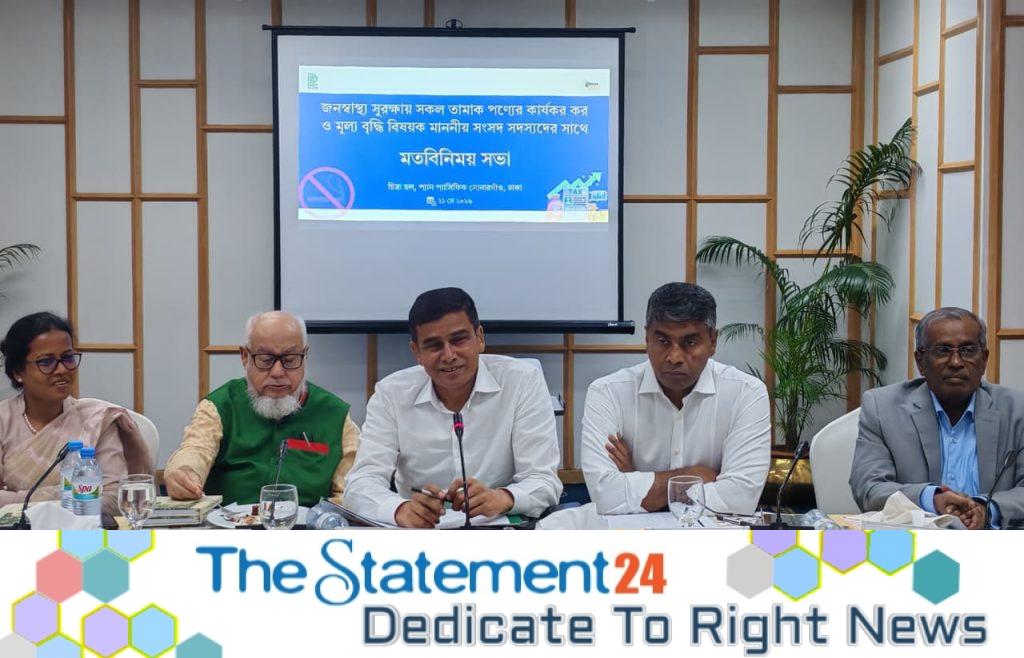
A discussion meeting organized by Development Organisation of the Rural Poor (DORP) was held on Thursday, 21 May 2026, at the Pan Pacific Sonargaon Hotel in Dhaka, demanding effective taxation and price increases on all tobacco products in the upcoming national budget for FY 2026–27 to protect public health.
The keynote paper presented at the event stated that Bangladesh currently has a four-tier cigarette pricing structure—low, medium, high, and premium. Around 90 percent of cigarettes sold in the market belong to the low and medium tiers, making tobacco products highly affordable and easily accessible, especially to young people and low-income populations. As a result, tobacco control efforts are becoming ineffective among these groups. The paper proposed merging the low and medium tiers and setting the minimum retail price at BDT 100 per 10-stick cigarette pack, while fixing prices at BDT 150 for the high tier and BDT 200 for the premium tier. It also recommended maintaining a 67 percent supplementary duty across all tiers and imposing a specific tax of BDT 4 per pack. According to the presentation, implementing these proposals could discourage more than 372,000 youths from initiating smoking and prevent the premature deaths of over 185,000 young people in the long term.
Speaking as the chief guest, Farhad Hossain Azad MP, State Minister for Water Resources, said that protecting public health and strengthening tobacco control were among the important commitments of the current government’s election manifesto. He emphasized that alongside tobacco control laws, effective taxation and price increases on tobacco products are equally essential. Referring to the keynote findings, he noted that while prices of essential commodities increased by 27 to 89 percent between 2021 and 2023, cigarette prices across different tiers rose by only 6 to 15 percent during the same period. Consequently, cigarettes have become relatively cheaper and more accessible despite rising living costs, posing a serious threat to the health of young people and low-income communities. He further stated that tobacco companies strategically target youths to create long-term consumers. He assured participants that he would raise the issue of increasing tobacco prices and implementing effective taxation in Parliament and discuss it with relevant policymakers.
Special guest Sultana Jesmin Jui MP, expressed concern as a woman legislator that the harms of tobacco are not limited to users alone but also affect women, children, and entire families. She mentioned that Bangladesh has the highest tobacco use rate in South Asia and that nearly 200,000 people die prematurely every year from tobacco-related diseases. She also highlighted that in 2024, the economic burden of tobacco-related health and environmental damages amounted to nearly BDT 87,000 crore, which is more than double the revenue generated from the tobacco sector. Referring to international experiences, she said that effective tobacco taxation can simultaneously reduce smoking and increase government revenue. She cited the example of the Philippines, where cigarette sales declined by 28.1 percent between 2012 and 2015 following the implementation of sin tax reforms and a unified tax structure, while government revenue more than tripled. She pledged to remain vocal in Parliament to protect public health and safeguard women, children, and youths from the harmful impacts of tobacco.
S M Jahangir Hossain MP stated that the information presented in the discussion clearly showed that the existing tobacco tax structure is causing the government to lose nearly BDT 44,000 crore in potential annual revenue. Supporting social movements on tobacco control, he said that this significant amount could contribute greatly to improving education, healthcare, and social protection programs. He also expressed concern that the easy availability of cheap cigarettes is driving increasing tobacco addiction among young people, posing a major threat to future generations. According to him, an effective tobacco tax policy is not only a matter of increasing revenue but also an important tool for protecting youths from tobacco addiction.
The seminar began with a welcome speech by DORP Founder and CEO AHM Noman. Closing remarks were delivered by Chairman Mohammad Nurul Amin, while the session was moderated by Deputy Executive Director Mohammad Zobair Hasan. Among others present at the event were former BCIC Chairman Md. Mostafizur Rahman, anti-tobacco youth representative Naima Ahmed, Imran Hasan, and other distinguished participants.