

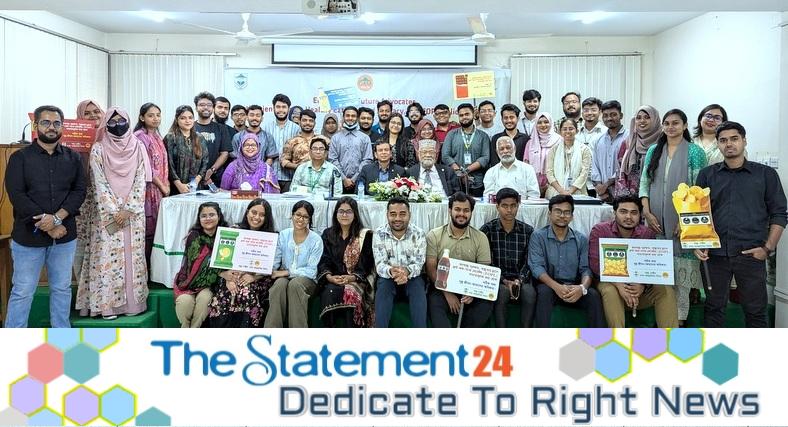
Young people have called for ensuring easy-to-understand labeling on packaged food products as part of implementing Front-of-Pack Labeling (FOPL) policy in Bangladesh to promote healthy eating habits.
The demand was raised during a day-long workshop titled “Empowering Future Youth: Healthy Eating Habits, Understanding Packaged Food Labeling and Supporting FOPL Policy” held on Sunday (May 17, 2026) in Dhanmondi, Dhaka. The workshop was organized by Dhaka Ahsania Mission with technical support from Global Health Advocacy Incubator.
Speakers at the event highlighted the importance of introducing Front-of-Pack Labeling (FOPL) in Bangladesh and ensuring simple and understandable nutrition information on packaged food products. They noted that around 54 countries worldwide have introduced different forms of FOPL, including mandatory implementation in 10 countries.
During the discussion, speakers emphasized the link between unhealthy packaged foods and non-communicable diseases (NCDs). Referring to World Health Organization data, they stated that 71 percent of deaths in Bangladesh are caused by non-communicable diseases such as heart disease, cancer, and diabetes. They also mentioned that 97 percent of people in the country consume packaged foods at least once a week. Excessive consumption of ultra-processed foods containing high levels of sugar, salt, saturated fat, and trans-fat increases the risk of premature death from NCDs among people aged 30 to 70 by 19 percent.
Chairman of the Bangladesh Food Safety Authority, Anwarul Islam Sarkar, attended the event as the chief guest. Special guests included Muhammad Ruhul Quddus (Bangladesh Country Lead, Reducing demand for unhealthy food, Global Health Advocacy Incubator) and Dr. S M Khalilur Rahman (Vice President, Dhaka Ahsania Mission).
In his speech, Anwarul Islam Sarkar said that there is a strong connection between packaged food consumption, modern lifestyle patterns, and deaths caused by non-communicable diseases. He stressed that achieving Sustainable Development Goal (SDG) 3.4 by 2030 would require collective efforts from all stakeholders. He also said that building awareness among youth about FOPL through proper knowledge and training could help create a healthier nation.
Muhammad Ruhul Quddus said, “The use of processed foods is increasing rapidly, along with the growing number of deaths from non-communicable diseases. Therefore, becoming more aware and returning to a healthy lifestyle should be the first responsibility of young people.”
Dr. S M Khalilur Rahman said, “Many industries in Bangladesh are successfully exporting products abroad by complying with international standards. This proves that by ensuring healthier packaged foods, we can both earn foreign currency and protect public health.”
In the welcome speech, Deputy Director of the Health Sector at Dhaka Ahsania Mission, Mukhlesur Rahman, said that at a time when unhealthy eating habits, preference for packaged foods, and the burden of NCDs are increasing, youth engagement and awareness are extremely important.
The workshop was chaired by the President of Dhaka Ahsania Mission, Professor Dr. Golam Rahman. Through presentations and discussions, participants were provided with knowledge on safe food practices, Front-of-Pack Labeling, leadership development, and youth engagement. Speakers said such initiatives would play an important role in promoting healthy food habits and advocating for policy changes in Bangladesh.
The sessions were moderated by Project Coordinator of Dhaka Ahsania Mission’s Health Sector, Mahbuba Rahman, and Coordinator of Ahsania Mission Youth Forum for Health and Wellbeing, Marjana Muntaha.