

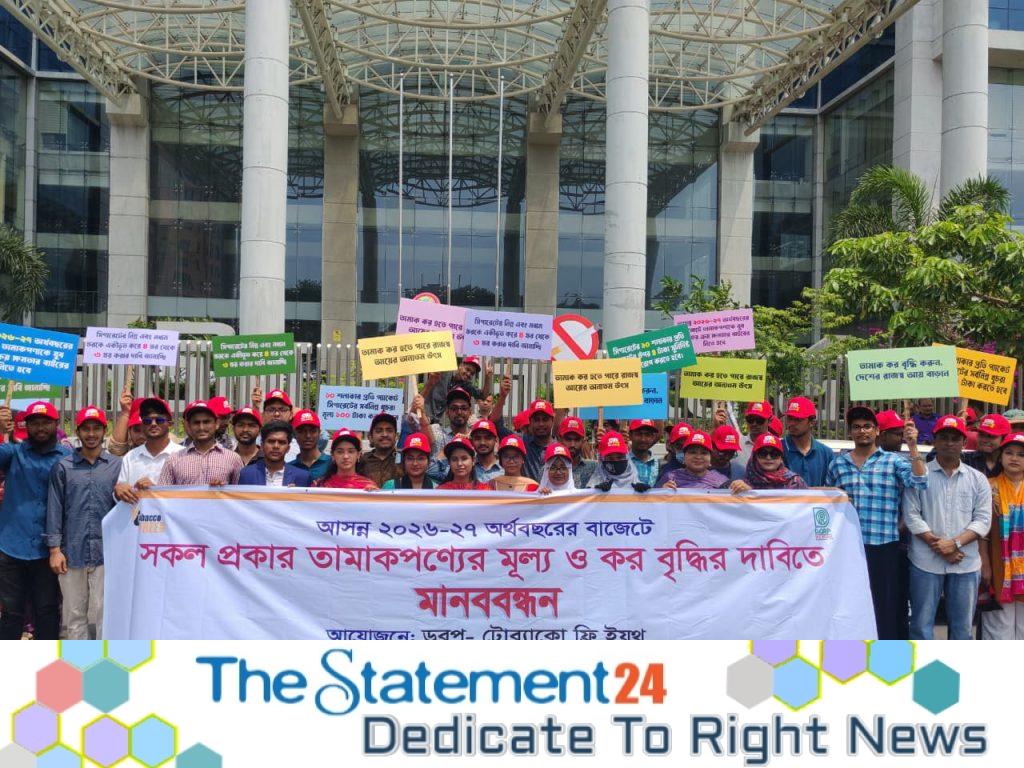
More than one hundred students from various universities, including members of DORP Tobacco-Free Youth, have called for effective taxation and higher prices on tobacco products in the upcoming national budget for fiscal year 2026–27. The demand was raised during a human chain organized in front of the National Board of Revenue building in Agargaon on Saturday morning, April 25, 2026. The young participants said that reducing the easy availability of cigarettes and other tobacco products is essential to protect the youth from the harmful effects of tobacco.
During the program, the students expressed concern that the widespread availability of tobacco products in Bangladesh has led to an alarming increase in tobacco use and smoking among young people and low-income groups, posing a serious threat to public health. They noted that nearly 200,000 people die prematurely each year from tobacco-related diseases, accounting for around 18 percent of all deaths in the country. To stop these preventable deaths, they said tobacco products must be placed beyond the reach and purchasing power of young people, which can only be achieved through effective taxation and price increases.
Saiful, a student of Bangladesh University of Professionals, said that tobacco causes annual health and environmental damage worth Tk 87,000 crore in Bangladesh, while the government earns only Tk 40,000 crore in revenue from the sector. He added that if smokeless tobacco products such as zarda, gul, and sada pata are included, the financial loss would be even greater. He emphasized that tobacco should not be viewed merely as a source of revenue and that there is no alternative to increasing tobacco prices through effective taxation.
Sadia, a student of Dhaka Central University, said tobacco products remain extremely cheap compared to essential commodities in Bangladesh. Since tobacco prices are not adjusted annually in line with inflation and income growth, these products continue to remain affordable for young people. As a result, current pricing policies have had little impact on reducing tobacco use. She warned that unless prices are increased effectively, tobacco products will remain within the reach of youth, exposing them to growing health risks.
Calling on the government to protect future generations from the devastating grip of tobacco, Jeba Afroza, a representative of DORP’s tobacco control project, said that the existing four-tier cigarette price structure is another reason why cigarettes remain cheap and easily accessible, encouraging tobacco use among young people. She proposed that in the 2026–27 budget, the low and medium cigarette tiers should be merged and the retail price for a pack of 10 sticks should be set at Tk 100, while the high tier should be set at Tk 150 and the premium tier at Tk 200. She also urged the government to maintain a 67 percent supplementary duty across all tiers and impose a specific tax of Tk 4 per pack.